CNC stands for Computer Numerical Control. A CNC machine uses computer-guided motion to control a cutting or marking tool with high precision. Instead of relying entirely on manual control, the operator designs a project digitally and the machine follows programmed paths to execute that design accurately and repeatably.
In our shop, CNC technology is used to cut, carve, engrave, and shape material. While CNC machines automate motion, they still require training, correct setup, and active supervision. Each CNC type operates differently and is suited to specific tasks. Training for each type of machine is available and required before using this equipment.
Our Library has several computers that are fully loaded with CNC design software for all of the CNC machines in our shop.
Our shop uses three distinct types of CNC machines:
- CNC Routers
- CNC Lasers
- Handheld CNC Routing (Shaper Origin)
CNC Routers
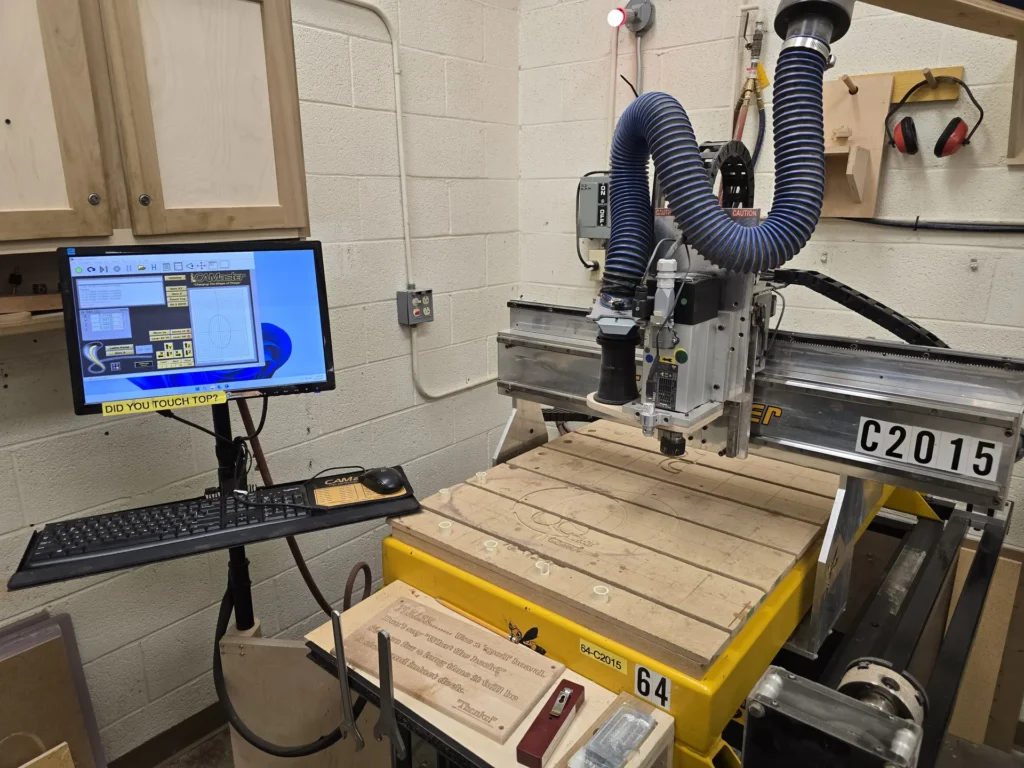
(24″ × 48″ Flatbed Routers with Rotary Attachments – Stinger CNC)
Our shop has two 24″ × 48″ flatbed CNC routers, each equipped with a rotary attachment. These machines use a rotating cutting bit to remove material under computer control. The rotary axis can be used to rotate while machining on the diameter of the material.
CNC routers are used for:
- Cutting parts to precise shapes
- Carving reliefs and 3D surfaces
- Pocketing, drilling, and profiling
- Sign making and decorative panels
- Turning cylindrical objects using the rotary attachment
Material must be securely clamped to the table or mounted in the rotary axis. Because routers remove material mechanically, they generate cutting forces, noise, dust, and chips, making proper workholding and dust collection essential. Training is required! Sign up for training here.
CNC Lasers
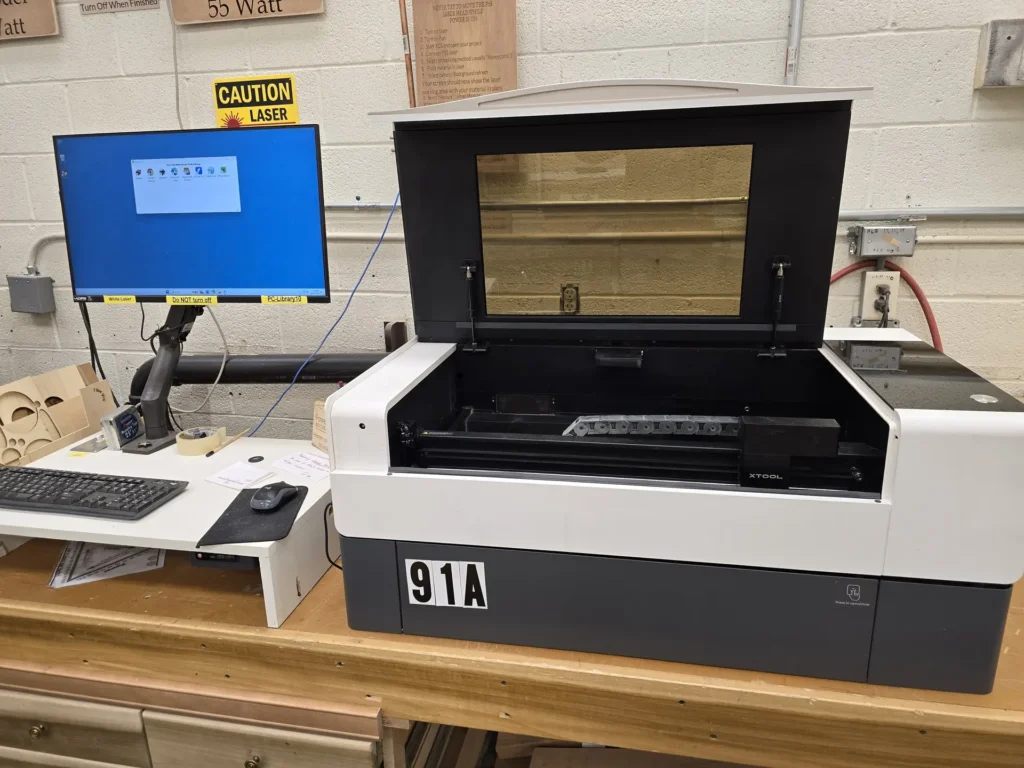
(25W and 40W Laser Systems)
Our shop also has two CNC laser machines, rated at 25 watts and 40 watts. These machines use a focused laser beam to cut or engrave material without physical contact.
CNC lasers are used for:
- Engraving text, images, and fine details
- Cutting thin wood
- Decorative work and rapid prototyping
Laser machines introduce hazards different from routers, including fire risk, heat, and fumes. Approved materials, proper ventilation, and constant supervision are required during operation. Training is required!
Handheld CNC Router

The Shaper Origin is a handheld router guided by CNC technology. Unlike traditional CNC routers, the operator physically moves the tool, while the machine’s onboard computer makes continuous micro-adjustments to keep the cut precisely on the programmed path.
The Shaper Origin is used for:
- Precision joinery such as mortises, tenons, and inlays
- Template-free routing
- On-site or large-panel work that cannot fit on a CNC table
- Accurate freehand-style routing with CNC assistance
The Shaper Origin bridges the gap between manual routing and full CNC automation. While it offers flexibility and portability, it still requires careful setup, correct material referencing, and a clear understanding of its guided cutting system.
Why Understanding CNC Types Matters
Although all three machines use CNC technology, they behave very differently:
- CNC routers use mechanical cutting forces and require rigid workholding.
- CNC lasers use heat and light energy, introducing fire and fume hazards.
- The Shaper Origin combines manual movement with CNC guidance, requiring active operator control and awareness.
Using the wrong CNC machine—or incorrect settings—can result in damaged material, equipment damage, or serious safety hazards. For this reason, machine-specific training and authorization are required before using any CNC equipment in the shop.
Key Takeaway
CNC machines are powerful tools that expand what is possible in a woodworking shop—but they are not push-button tools. Successful CNC work depends on understanding:
- The type of CNC machine being used
- Proper setup and material selection
- Software workflow and machine limits
- The unique safety considerations of each system
When used correctly, CNC routers, lasers, and the Shaper Origin provide precision, repeatability, and creative flexibility. When misunderstood, they can be expensive—and dangerous.