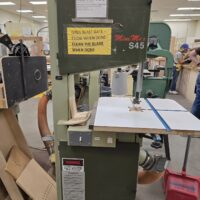
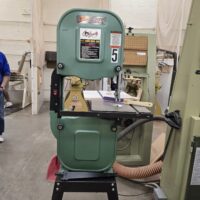
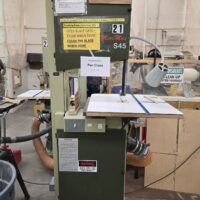
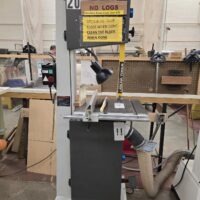
Description
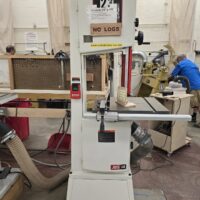
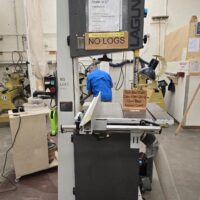
Our shop is equipped with seven band saws of various sizes, each designed for specific types of cutting operations. These saws use a continuous loop blade that cuts downward into the table, making them well suited for controlled cutting and shaping of wood.
Band saws are commonly used for curved cuts, irregular shapes, re-sawing lumber, and breaking down rough stock that cannot be safely or efficiently cut on circular saws. Because the blade moves in a single downward direction, band saws are generally more forgiving for freehand work and curved cuts than circular saws.
Choosing the correct band saw size is critical. Smaller band saws are intended for light-duty work, thinner material, and detailed shaping. Larger band saws are designed to handle thicker stock, wider cuts, and more demanding operations. Using a saw that is too small for the material can result in blade binding, poor cut quality, excessive wear, or unsafe operating conditions.
Each band saw in the shop has specific limitations regarding material size, blade type, and approved uses. Logs and oversized material are prohibited on mid-sized band saws and must only be cut on the designated log saw by trained operators.
Selecting the proper band saw improves cut quality, reduces machine wear, and significantly increases operator safety. When in doubt about which band saw to use, members should consult a Floor Monitor before proceeding.
⚠️ Warnings
Blade damage is the operator’s responsibility. Breaking or bending a band saw blade due to misuse will result in the member being charged for replacement, with costs based on blade size.
Never force the cut. Excessive feed pressure, twisting the workpiece, or backing out of a cut incorrectly can cause blade failure and loss of control.
Failure to clean the saw table, inside the upper and lower cabinet and the surrounding floor area may result in disciplinary action.
Usage Instructions
- Select the correct band saw for the job. Choose a saw appropriate for the size, thickness, and type of material being cut.
- Inspect the machine before use. Verify the blade is properly installed, tensioned, and tracking correctly. Ensure guards and guides are set and secure.
- Wear required PPE. Safety glasses are required; hearing protection is recommended.
- Inspect the material. Ensure wood is free of nails, screws, wire, or other foreign objects.
- Adjust blade guides and guards to just above the height of the material being cut.
- Position the workpiece flat and stable on the table before starting the saw.
- Start the saw and allow it to reach full speed before feeding material.
- Feed the material slowly and steadily. Let the blade cut at its own pace—do not force the cut.
- Use relief cuts for tight curves to prevent blade twisting or binding.
- Keep hands clear of the blade path and use push sticks or fixtures when appropriate.
- Do not back out of a cut with the blade running. Stop the saw first if a cut must be abandoned.
- Complete the cut fully before removing the workpiece.
- Turn off the saw and wait for a complete stop before making adjustments or leaving the machine.
Cleaning
- Turn off the saw and wait for the blade to stop completely before cleaning.
- Disconnect or lock out power if required by shop policy.
- Clear the table and surrounding area of sawdust, offcuts, and debris.
- Clean sawdust and debris from the upper and lower cabinets using a brush or vacuum.
- Inspect the dust collection ports and ensure they are clear and unobstructed.
- Remove buildup from blade guides, guards, and wheels as needed.
- Sweep the floor around the saw to remove sawdust and debris.
- Leave the saw and area clean and safe for the next user.
Safety Issues
- Blade breakage or bending Improper saw selection, forcing the cut, twisting material, or backing out of a cut incorrectly can break or permanently damage the blade.
- Improper saw selection Using a band saw that is too small for the material increases the risk of blade failure and loss of control.
- Hand and finger contact Hands placed too close to the blade path can result in serious injury.
- Material binding or shifting Thick, irregular, or stressed wood can bind the blade or move unexpectedly during cutting.
- Backing out of cuts Pulling material backward with the blade running can cause the blade to jump off the wheels or break.
- Flying debris Small cutoffs, knots, or broken blade fragments can be ejected during cutting.
- Guide and guard maladjustment. Improperly set blade guides or guards increase blade exposure and reduce control.
- Loose clothing and entanglement Sleeves, gloves, jewelry, or long hair can be caught by the blade or moving parts.
- Hidden material defects Nails, screws, wire, or embedded debris can damage the blade or become projectiles.
- Inadequate cleanup Accumulated sawdust in cabinets or around the machine can interfere with operation and create slip hazards. This is a fire hazard!!!