
Description
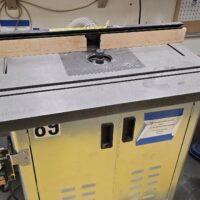
A router table is a stationary woodworking machine that uses a fixed, table-mounted router motor to perform shaping and joinery operations. In our shop, the router tables are industrial-style machines, more closely resembling a small shaper than a handheld router setup.
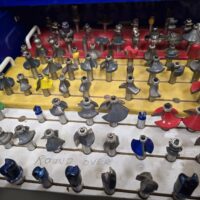
These machines are designed to accept ½-inch shank router bits, providing increased rigidity, improved surface finish, and greater stability during cutting operations. The router is permanently mounted beneath a heavy, flat table, and workpieces are guided past the rotating bit using an adjustable fence and table surface.
Router tables are commonly used for edge profiling, grooving, rabbeting, pattern routing, and light joinery operations. The fence and table provide consistent reference surfaces, allowing for accurate, repeatable cuts that would be difficult or unsafe with a handheld router.
Although similar in function to a shaper, a router table operates at higher spindle speeds and uses router-specific tooling, making correct bit selection, feed direction, and depth control critical. Because of the cutting forces involved, proper setup and workpiece control are essential.
When used correctly, the router table provides a versatile and precise method for shaping and joinery work, bridging the gap between handheld routing and full-size shaper operations.
⚠️ Warnings
High-speed cutter hazard. Router bits operate at extremely high RPM. Loss of control, improper feed direction, or incorrect setup can cause violent kickback or ejection of the workpiece.
Workpiece control is mandatory. Stock must be properly supported and guided against the fence using push blocks, featherboards, or guards as required. Never freehand cut on the router table.
Failure to clean the table and surrounding area may result in disciplinary action.
Usage Instructions
- Inspect the router table before use. Ensure the bit is properly installed, fully seated, and securely tightened.
- Select the correct bit and speed for the operation and material.
- Wear required PPE. Safety glasses are required; hearing protection is recommended.
- Set the fence and depth of cut before starting the machine. Lock all adjustments securely.
- Install guards, featherboards, or hold-downs as required for the cut.
- Position the workpiece firmly against the fence and flat on the table.
- Start the router and allow it to reach full speed before feeding material.
- Feed the workpiece against the rotation of the bit using steady, controlled pressure.
- Use push blocks or push sticks to keep hands clear of the cutter.
- Make multiple light passes rather than removing excessive material in one cut.
- Do not freehand cut. Always use the fence or an approved guide.
- Turn off the router and wait for a complete stop before adjusting the setup or leaving the machine.
Cleaning
- Ensure router and dust collector are off.
- Remove chips and dust from the table surface using a brush or vacuum.
- Clear debris from the fence faces and slots to ensure accurate future setups.
- Inspect the dust collection intake and verify it is clear and unobstructed.
- Clean chips from around the bit opening without touching the cutter.
- Sweep the floor around the router table to remove sawdust and debris.
- Return push blocks, guards, and accessories to their proper storage locations.
- Leave the router table and area clean and safe for the next user.
- Rotate the crank on top of the air filter to allow dust to fall from the filter to the collection bag.
Safety Issues
- Extreme injury hazard The high-speed cutter can cause catastrophic injury instantly. Contact with the bit can result in severe, permanent injury.
- Kickback and workpiece ejection Incorrect feed direction, improper setup, or loss of control can cause the workpiece to be violently thrown.
- Hand placement danger Hands placed too close to the cutter can be pulled into the bit with no chance for reaction.
- High-speed cutter inertia Router bits spin at very high RPM and do not stop immediately when power is shut off.
- Improper feed direction Feeding with the rotation of the bit (climb cutting) can cause sudden loss of control.
- Insufficient workpiece control Freehand cutting or lack of guards, featherboards, or push blocks greatly increases injury risk.
- Bit failure or loosening Improperly installed or damaged bits can break or be ejected at high speed.
- Loose clothing and entanglement Sleeves, gloves, jewelry, or long hair can be caught by the cutter or spinning workpiece.
- False sense of familiarity The machine’s size and appearance can lead operators to underestimate its power and danger.
Under the last bullet point in the cleaning section the operator needs to turn the crank on the top of the air filter to allow dust particulates to fall from the filter area to the collection bag in the bottom of the dust evacuator. The router and dust collector should be turned off during this operation. #4653