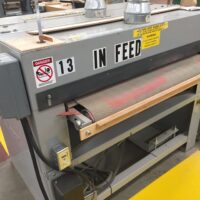
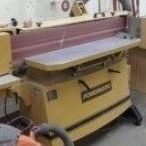
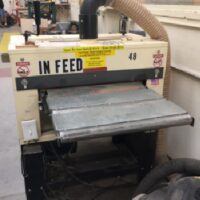
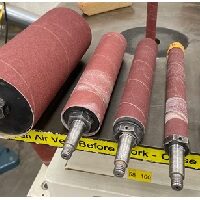
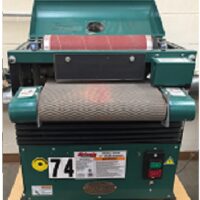
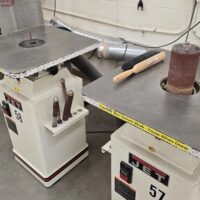

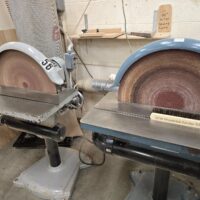

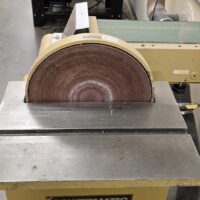
Description
Power sanders are stationary woodworking machines designed to smooth, shape, and refine wood surfaces by removing material through controlled abrasion. In an industrial woodshop, these machines are used for surface preparation, edge shaping, curve sanding, and final smoothing after cutting and jointing operations.
Common types of power sanders include drum sanders, oscillating drum sanders, stationary drum sanders, and large disk sanders. While each type is designed for specific tasks, they share similar operating principles: an abrasive surface mounted to a rotating drum or disk removes small amounts of material as the workpiece is guided against it.
These machines are especially effective for sanding curved profiles, smoothing end grain, refining edges, and removing machining marks. Oscillating models add vertical movement to the drum, which helps reduce heat buildup, prevent burning, and extend abrasive life. Large disk sanders provide a flat, stable sanding surface for truing edges and shaping larger workpieces.
Built for durability and continuous use, industrial power sanders offer precise control and consistent results. When used properly, they improve surface quality, accuracy, and efficiency while reducing the need for excessive hand sanding.
⚠️ Warnings
Our biggest maintenance expense is sandpaper. Misuse of the sanding machines that causes damage to the sandpaper will result in the member being bill for the expense. Even the smallest amount of sanding creates dust. Failure to clean up after using the sanders may result in disciplinary action.
All glued parts must cure for 24 hours before sanding. Wet glue will leave marks on the sandpaper that is visible in the cameras. You will be charged.
Usage Instructions
- Inspect the machine before use. Verify guards are in place, tables are secure, and abrasives are properly installed and in good condition. If the surface is damaged report it BEFORE you use it.
- Inspect your wood before sanding. It must be dry and free of sap. Green wood will ruin sandpaper. Only dry wood should ever contact the sandpaper. Beware of metal in your wood.
- Select the correct abrasive grit for the task. Use coarser grits for material removal and finer grits for smoothing and finishing.
- Adjust tables and fences as needed to support the workpiece and maintain proper control.
- Start the machine and allow it to reach full operating speed before sanding.
- Support the workpiece firmly and apply light, even pressure. Let the abrasive do the work—do not force the material as that will damage the sanding surface.
- Keep the work moving to avoid burning, uneven sanding, or excessive wear on the abrasive.
- Sand on the correct portion of the drum or disk as designated by shop policy to reduce the risk of kickback or grabbing.
- Maintain a safe hand position at all times and use auxiliary supports or fixtures for small or irregular pieces.
- Complete the pass fully before removing the workpiece from the sanding surface.
- Turn off the machine and wait for it to come to a complete stop before making adjustments or leaving the area.
Cleaning
- Turn off the machine and wait for all moving parts to come to a complete stop.
- Remove dust and debris from tables, drums, disks, and surrounding areas using a brush or vacuum. Do not use compressed air.
- Clean sanding abrasives regularly using an approved rubber abrasive cleaning stick. With the machine running, lightly press the eraser against the moving abrasive to remove pitch and debris. Keep hands clear and maintain a firm grip on the cleaning stick.
- Inspect abrasives for excessive wear, tearing, or loading. Replace damaged or worn abrasives as needed.
- Wipe tables and fences clean and apply a light coat of approved table lubricant if required.
- Empty dust collection containers if assigned as part of shop procedures.
- Leave the machine and area clean and ready for the next user.
Safety Issues
- Eye protection required at all times. Hearing protection is recommended.
- Keep hands clear of moving abrasives. Maintain safe hand placement and use fixtures or supports for small, narrow, or irregular workpieces.
- Do not force the workpiece. Excessive pressure can cause grabbing, kickback, or damage to the abrasive.
- Sand on the correct area of the drum or disk as designated by shop policy to reduce the risk of the workpiece being pulled from your hands.
- Keep workpieces moving to prevent burning, uneven sanding, and abrasive loading.
- Do not sand stock that is too small to control safely by hand.
- Never reach across or behind a moving drum or disk.
- Avoid loose clothing, gloves, jewelry, or long hair that could become entangled.
- Do not use damaged or loose abrasives. Replace worn or torn sanding media immediately.
- Allow the machine to reach full speed before sanding and wait for a complete stop before adjustments or cleaning.
- Use dust collection when available and follow shop dust-control procedures.