Description
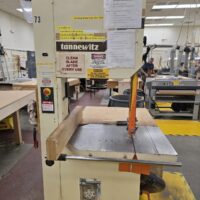
The log saw is the largest and most powerful band saw in the shop. Manufactured by Tannewitz, this industrial machine stands approximately 8 feet tall and is designed specifically for cutting large logs and heavy rough stock that cannot be safely processed on smaller band saws.
The saw uses a heavy-duty continuous band blade with approximately ¾ inch tooth spacing, allowing it to aggressively cut through thick, dense material. This coarse tooth geometry makes the saw highly effective for log processing, but also significantly increases the potential hazard if the machine is used improperly.
Because of the size, cutting power, and forces involved when securing and cutting logs, this saw presents serious safety risks. Improperly supported material, shifting logs, or incorrect cutting technique can result in sudden movement, binding, or ejection of the workpiece. For this reason, operation of the log saw is restricted.
Training and authorization are required before any member may use this machine. Only certified operators who have completed log saw training and obtained the control key may unlock and operate the saw. This policy ensures that users fully understand proper material handling, securing methods, cutting procedures, and emergency response before using the machine.
When used correctly by trained operators, the log saw is an invaluable tool for processing large logs safely and efficiently. When misused, it is one of the most dangerous machines in the shop—making strict adherence to training and shop policy imperative.
⚠️ Warnings
Training is required to operate this saw. Monitors must verify completion of operational training by scanning the members badge and checking the computer screen before key issuance. Any member may request training, but only trained and authorized users may use the log saw.
Sawing logs is inherently dangerous due to the size and weight of the material and the power of the machine.
Operators are responsible for blade damage resulting from misuse and may be billed for repairs or replacement.
Failure to completely remove wood sap from the blade after use may result in disciplinary action.
Usage Instructions
- Authorization required. Only trained and certified operators with the control key may unlock and operate the log saw. The log saw lockout key is in the tool crib. Monitors must verify completion of operational training by scanning the members badge and checking the computer screen before key issuance.
- Inspect the machine before use. Verify guards are in place, the blade is properly tensioned, and the table and surrounding area are clear.
- Wear required PPE. Safety glasses and hearing protection are mandatory; additional PPE as required by shop policy.
- Inspect the log carefully. Ensure logs are free of nails, screws, wire, embedded metal, or foreign objects.
- Position the log securely. Place the log flat and stable on the table or carriage to prevent rolling or shifting.
- Secure the material before cutting. Use approved clamps, stops, or restraints as trained. Never rely on hands or body weight to hold a log.
- Plan the cut before starting. Confirm blade clearance, cutting path, and exit area before engaging the saw.
- Start the saw and allow it to reach full speed before feeding material.
- Feed the log slowly and deliberately. Let the blade cut at its own pace—do not force the material.
- Maintain a stable stance and clear hand position at all times, keeping hands well away from the blade path.
- Remain alert for movement. Stop immediately if the log shifts, binds, or behaves unexpectedly.
- Complete the cut fully before backing material away from the blade.
- Turn off the saw and wait for a complete stop before adjusting material, clearing debris, or leaving the machine.
- Lock and secure the saw after use by removing the control key and returning it per shop policy.
Cleaning
- Turn off the saw and wait for the blade to come to a complete stop before cleaning.
- Disconnect or lock out power as required by shop policy.
- Clear the table, carriage, and surrounding area of sawdust, bark, chips, and cutoffs.
- Clean sap buildup from the blade using approved wire brushes and cleaning spray solution, brushing along the full length of the blade. You’ll need to carefully rotate the blade to accomplish this.
- Keep hands clear of the teeth and never clean a moving blade.
- Remove accumulated debris from guides, guards, and blade housing using a brush or vacuum.
- Inspect the dust collection intake to ensure it is clear and unobstructed.
- Sweep the floor around the saw to remove sawdust, bark, and debris.
- Inspect the machine before leaving to confirm guards are in place and the area is clean and safe.
- Return the control key according to shop policy and secure the saw after use.
Safety Issues
- Log movement and rolling Large, round logs can shift, roll, or rotate unexpectedly if not properly secured.
- Material ejection Logs, slabs, or broken pieces can be thrown from the saw if binding or sudden movement occurs.
- High-energy blade The large band blade with wide tooth spacing can cause severe injury on contact.
- Hand and body placement Hands, arms, or body positioned too close to the blade path are at extreme risk.
- Binding and blade stress Improper feed rate or internal stresses in logs can cause binding, sudden stops, or blade failure.
- Hidden defects Nails, wire, bullets, stones, or internal cracks may not be visible and can damage the blade or become projectiles.
- Pinch and crush points Logs, clamps, carriages, and guides can create serious crush hazards during positioning and cutting.
- Kickback-like forces While band saws do not kick back like circular saws, large logs can still move violently when released or cut through.
- Entanglement hazards Loose clothing, gloves, jewelry, or long hair can be caught by the blade or moving components.
- Noise exposure Cutting large logs produces high noise levels requiring hearing protection.
- Inexperienced operation Use by untrained or unauthorized operators greatly increases the risk of serious injury.
- Maintenance hazards Blade cleaning, adjustments, or clearing jams without proper lockout can result in severe injury.
Monitors must verify completion of operational training by scanning the members badge and checking the computer screen before key issuance. #4653
Under the cleaning section and fourth bullet point add cleaning spray solution after wire brush. #4653
under the cleaning section bullet point seven remove “if equipped” add 2 dust collection ports.
#4653