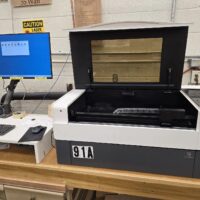
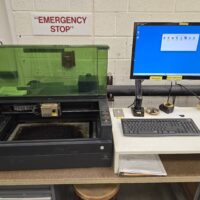
Description
A flatbed laser machine is a CNC-controlled tool that uses a focused laser beam to cut and engrave material placed on a flat work surface. Unlike mechanical cutting machines, lasers remove material using heat and light energy, allowing for extremely fine detail and clean edges without physical contact.
In our shop, flatbed laser machines are used for engraving text and images, cutting intricate shapes, and producing detailed decorative or functional parts. Because the laser follows computer-generated paths, it can reproduce designs with high accuracy and repeatability, making it ideal for signage, artwork, templates, and precision components.
Flatbed lasers excel at thin and lightweight materials and are particularly well suited for work that requires sharp corners, small features, and consistent results. However, because they rely on heat, material selection, proper settings, ventilation, and constant supervision are critical to safe operation.
When used correctly, flatbed laser machines provide speed, precision, and design flexibility that complement CNC routers and other cutting tools in the shop.
⚠️ Warnings
Fire hazard: Laser cutting uses intense heat and can ignite materials unexpectedly. The machine must be actively monitored at all times while running. Never leave a laser unattended, and stop the job immediately if flames or excessive charring occur.
Toxic fumes and materials: Cutting or engraving unapproved materials can release toxic or corrosive fumes that endanger people and damage the machine. Only approved materials may be used, and proper ventilation must be operating before starting any job.
Training is required to use this machine. Sign up here.
Failure to clean up after you are done may result in disciplinary action.
Usage Instructions
- Reserve time on the laser in advance. S1Laser Signup. P2S Laser Signup.
- Inspect the laser before use. Ensure the bed is clear, optics are clean, and ventilation is operating.
- Wear required PPE. Safety glasses are required.
- Verify material is approved for laser cutting or engraving and appropriate for the machine’s wattage.
- Prepare and place the material flat on the laser bed to ensure accurate cutting and focus.
- Load the design file and verify scale, orientation, and cut order before starting.
- Perform a test cut or engraving when using a new material or unfamiliar settings.
- Start the job and monitor continuously. Never leave the laser unattended while operating.
- Pause or stop immediately if flames, excessive smoke, or unexpected behavior occur.
- Allow the machine to complete the job fully and fumes to clear before opening the lid.
- Turn off the laser and ventilation system when finished.
Cleaning
- Turn off the laser and wait for exhaust to clear before cleaning.
- Allow the machine to cool if it has been running.
- Remove cut pieces and scrap material from the laser bed.
- Clean debris and residue from the bed using a brush or vacuum.
- Inspect and clean the exhaust intake for blockage.
- Wipe down accessible surfaces to remove dust or residue—do not touch optics unless trained.
- Clean the surrounding work area and dispose of waste properly.
- Report excessive residue, damage, or unusual conditions to a Floor Monitor.
Safety Issues
- Fire risk The laser generates intense heat and can ignite materials unexpectedly. Lasers must never be left unattended while operating. Know where fire extinguishers are located.
- Toxic fumes Cutting or engraving unapproved materials can release hazardous fumes that pose serious health risks and damage equipment.
- Flame spread Small flames can quickly grow if cutting parameters are incorrect or debris accumulates in the bed.
- Eye hazard Direct or reflected laser exposure can cause eye injury. Never defeat interlocks or operate with covers open.
- Material ignition after cutting Hot material or embers can continue smoldering after the job completes.
- Improper material selection Certain plastics, laminates, and treated woods are unsafe and prohibited.
- Ventilation failure Operating without proper exhaust or air assist increases fire and fume hazards.
- Unexpected motion The gantry moves automatically and can pinch fingers if accessed while running.
- Residue buildup Accumulated debris increases fire risk and reduces machine performance.
- False sense of safety Because cutting is quiet and automated, operators may underestimate the danger and lose focus.